
Association of International Marathons and Distance Races
The home of world running™
Partner highlight
06 April 2026, 10am UTC
Japan’s running culture

How has Japan’s running culture been built? The answer lies in continuous pursuit of what runners seek across different eras.
Our company’s journey began in 1975 when we launched Runners, Japan’s first dedicated running magazine. In the pre-internet era accessing information about races across Japan was challenging. By centralising race information and handling entries through Runners, we significantly improved access to race information and entry processes that were previously managed independently by each event.
A pivotal moment came with our introduction of the Honolulu Marathon tour. While Japan had world-famous elite races in the 1970s, recreational runners had limited options. The Honolulu Marathon, with its festival-like atmosphere and no time limits, offered a different perspective on marathon running. Our thinking was simple: “If Japan doesn’t have festival-like races, we’ll take runners to Honolulu.”
In collaboration with major travel agencies, we created Japan’s first Honolulu Marathon tour. As more runners experienced this unique event demand grew for similar races in Japan and helped to shape today’s diverse running culture with a variety of races held nationwide. The media played a crucial role in conveying such “sentiments” to society.
We pioneered chip timing in Japan, revolutionising timing accuracy and enabling larger-scale race organisation. Another significant innovation was our “Full Marathon Age-Specific Rankings,” launched 21 years ago. This system collects marathon data nationwide and ranks runners by single-year age groups, from first to last place for each age bracket. Runners can check their standings among their age group on Runnet, with top 100 names published in Runners magazine. This system motivates runners to improve their rankings and provides a new competitive element for aging runners who can track their performance within their current age group.
Addressing gender disparity in running – currently 80% male and 20% female – we created the Shibuya-Omotesando Women’s Run. This 10km race features 5,000 women running through Japan’s premier shopping district, aiming to encourage greater female participation through iconic events and media coverage.
Recent years have seen us focus on the Mt. Fuji Marathon, designed to offer international visitors a unique racing experience with spectacular views of Mt. Fuji. The December 2025 race attracted about 12,000 registrants, with nearly 70% being international runners.
Beyond the Mt. Fuji Marathon, Japan offers numerous attractive races, reflected in our international runner entry site “RunJapan” growing at over 150% year-on-year. The vision of “International and Japanese runners running together in harmony” is becoming an integral part of Japan’s evolving running culture.
We hope that people around the world will experience Japanese running culture. We are looking forward to many runners crossing borders to come and run in Japanese marathon events.
https://runjapan.jp/
Partners

Sports Partner

Photo Partner

Registration Partner

Medals Partner
For further information on our partners, click on the logos above.
Distance Running
Official quarterly magazine of AIMS
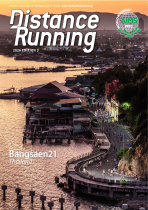
Latest issue:
2026 Edition 3
Cover: Bangsaen21, Thailand
Keep up to date!
For the latest race dates please consult the official online AIMS calendar.
You can also subscribe to the AIMS calendar in your calendaring application of choice, whether on your phone, tablet or computer. Simply subscribe to webcal://aims-worldrunning.org/events.ics in your calendar app.
AIMS
the home of world running™